We help facility managers, property teams, business owners, and general contractors get commercial openings safe, operational, and back into a maintainable condition. Barton services the complete opening: door, track or guides, springs and hardware, operator, safety devices, controls, and related dock equipment.
Start With the Operational Problem
When an opening is down, tell us what the facility cannot do: secure the building, move a truck, serve a customer, protect a temperature-controlled area, or keep a production lane moving. That context helps our team triage the call and arrive prepared.
Before calling, collect what is safe and easy to reach:
- Site address, door or bay number, and the best on-site contact
- Door and operator make or model, if the label is visible
- Whether the opening is stuck open, stuck closed, crooked, off its guides, or making a new noise
- Whether the building can be secured and whether trucks or production are blocked
- Clear photos of the complete opening, damaged area, and equipment labels
Stop cycling the equipment if the door is crooked, a cable or spring is loose, a section or slat is out of place, a safety device is damaged, or people and vehicles cannot be kept clear. Secure the area and call Barton for the next step.
Commercial Doors and Dock Equipment We Service
- Sectional overhead doors: broken springs and cables, worn rollers and hinges, damaged sections, track problems, perimeter seals, and operator issues
- Rolling steel and counter doors: damaged slats, guides, bottom bars, hoods, chain or motor operation, limits, and controls
- Security grilles and shutters: curtain alignment, guides, locking hardware, motor or manual operation, and service-window applications
- High-speed, cold-storage, and specialty doors: curtain or panel damage, guides, seals, sensors, controls, and application-specific operator faults
- Commercial operators and safety devices: limits, wall controls, photo eyes, monitored edges, radio controls, wiring symptoms, and accessory compatibility
- Loading dock equipment: levelers, vehicle restraints, seals and shelters, bumpers, communication lights, and related controls
For labeled rolling fire doors, use our fire door drop testing service for annual inspection, testing, and documentation. Fire-door work has manufacturer, labeling, and code requirements that should not be treated as an ordinary roll-up door repair.
Planned Maintenance Based on Use, Not a Generic Checklist
A maintenance plan should reflect how each opening is used. A warehouse door cycling throughout a shift, a restaurant counter shutter, and a seasonal agricultural opening do not have the same wear pattern or downtime risk.
A practical first visit can include:
- Identifying each opening by location, door type, operator, and available model information.
- Checking travel, balance, hardware, tracks or guides, fasteners, seals, and visible wear.
- Testing operator limits, controls, and installed safety devices through normal operation.
- Separating immediate safety or shutdown items from repairs that can be planned around production.
- Recommending a service interval based on cycle volume, environment, equipment condition, operational criticality, and manufacturer guidance.
The result is a prioritized scope that a facility team can schedule and budget, instead of waiting for every worn component to become an emergency call. Planned maintenance does not replace manufacturer-required inspections, fire-door testing, or requirements from the authority having jurisdiction.
Facility and Response Planning
We support warehouses and distribution sites, automotive and service buildings, self-storage facilities, retail and restaurant openings, food and agricultural operations, cold-storage environments, and commercial construction projects. Tell us about receiving windows, shift changes, security deadlines, lift access, site orientation, or escort requirements when scheduling so the visit can fit the way the facility operates.
During normal business hours, Barton dispatches commercial calls based on safety, operational impact, location, and technician availability. If the need is after hours, call to discuss the site and opening; after-hours help is based on location and technician availability. We do not publish a blanket 24/7 response guarantee.
Local Commercial Work
Our service area is backed by field work across different commercial opening types:
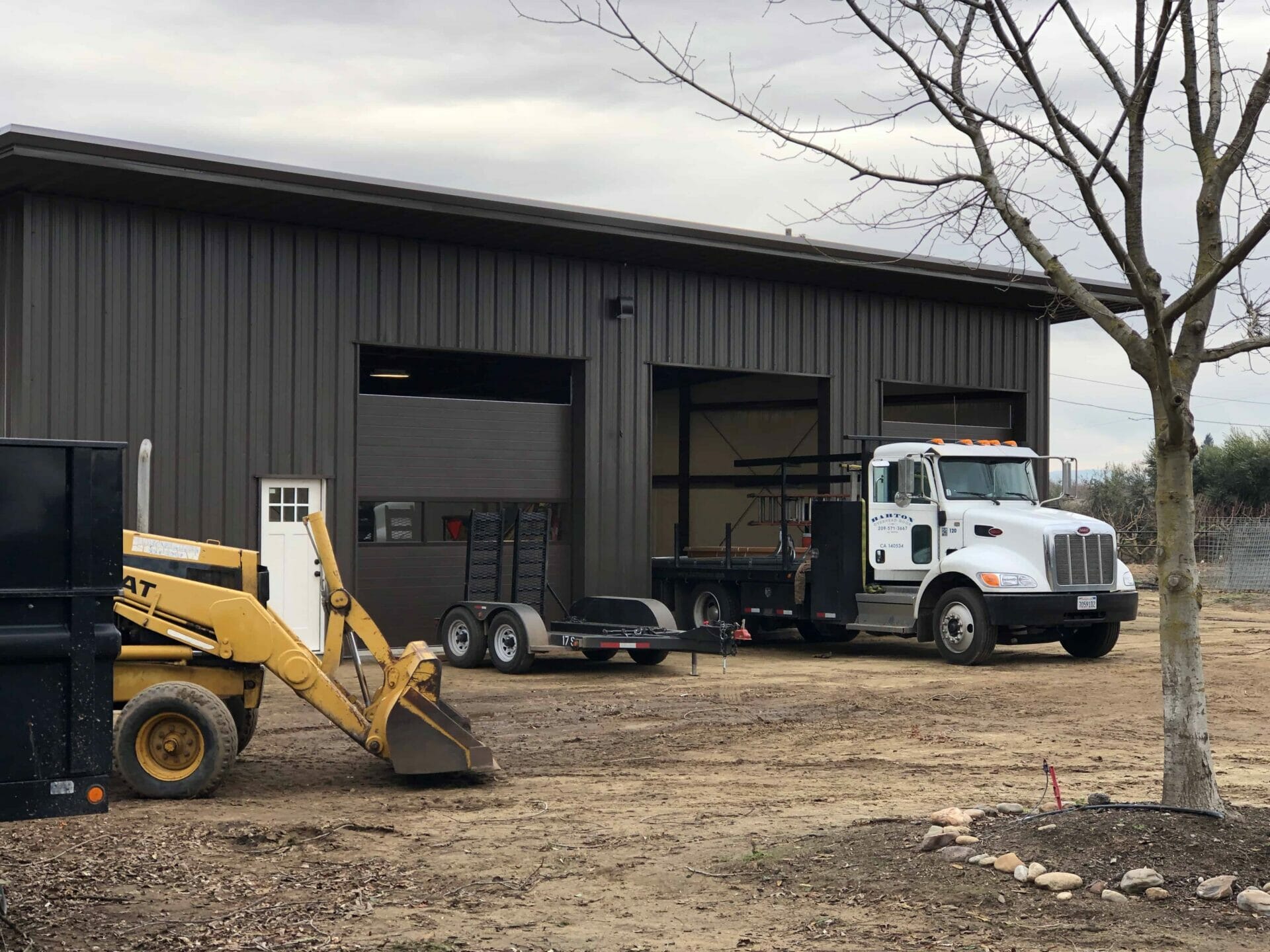
- An Oakdale shop installation with brown C.H.I. 3285 sectional doors and full-view sections
- A Livingston loading dock project with a Blue Giant dock leveler, dock seal, and StrongArm vehicle restraint
- Six Stockton counter shutters installed for service-window security at Dutch Bros
- An insulated commercial sectional installation in Bear Valley completed by Barton’s commercial crew
Barton is an IDEA Accredited Door Dealer and has served the region since 1973. Those credentials matter, but the project examples above show the range of openings our commercial team works with locally.
Service Area
Our Modesto and Sonora teams provide service throughout much of the Central Valley and Mother Lode, including Modesto, Sonora, Stockton, Merced, Manteca, Tracy, Oakdale, and Angels Camp. Scheduling depends on the site, equipment, and available technician coverage.
See all local service pages:
Commercial Door Service FAQ
Do you provide 24/7 commercial door service?
We do not advertise a blanket 24/7 response guarantee. Call during normal business hours for dispatch, or call to discuss an after-hours safety or operational need. After-hours help depends on the site location and technician availability.
What information helps you respond to a down door?
Send the site address, door or bay number, equipment make or model, a short description of what changed, whether the opening can be secured, and photos when they can be taken safely. Also identify any receiving, production, customer-service, or access deadline affected by the failure.
Can Barton maintain a facility with different door and operator brands?
Yes, we work with many common commercial door, operator, and dock-equipment systems. Share the equipment list or label photos first so we can confirm the scope, parts path, and whether manufacturer-specific support is required.
How often should commercial doors receive planned maintenance?
The interval depends on cycles, environment, equipment condition, operational importance, and manufacturer guidance. We can inspect the openings, identify the highest-risk wear, and recommend a practical schedule rather than assigning the same interval to every asset.
Can the same visit include a fire-door drop test?
Tell us about the labeled fire door when scheduling. Annual fire door drop testing requires the correct inspection, functional test, reset, and documentation process, so it should be scoped separately from routine door maintenance.
Request Commercial Service
Call Modesto at (209) 571-3667 or Sonora at (209) 532-3667, or use the service form on this page. Include the site address, affected opening, operational impact, and safe-access details so we can route the request correctly.
Commercial Installation Examples
When an opening needs replacement or a different configuration, these Barton projects illustrate the equipment we install: commercial sectional doors at an Oakdale shop, counter shutters at Dutch Bros in Stockton, and retractable rail dock shelters in Modesto. Share photos of your opening so we can discuss the service or replacement work it needs.